White Cuib | solo show
Default Image


13. 06. 2023 – 20. 06. 2023, Cluj-Napoca | Curator: Alina Andrei
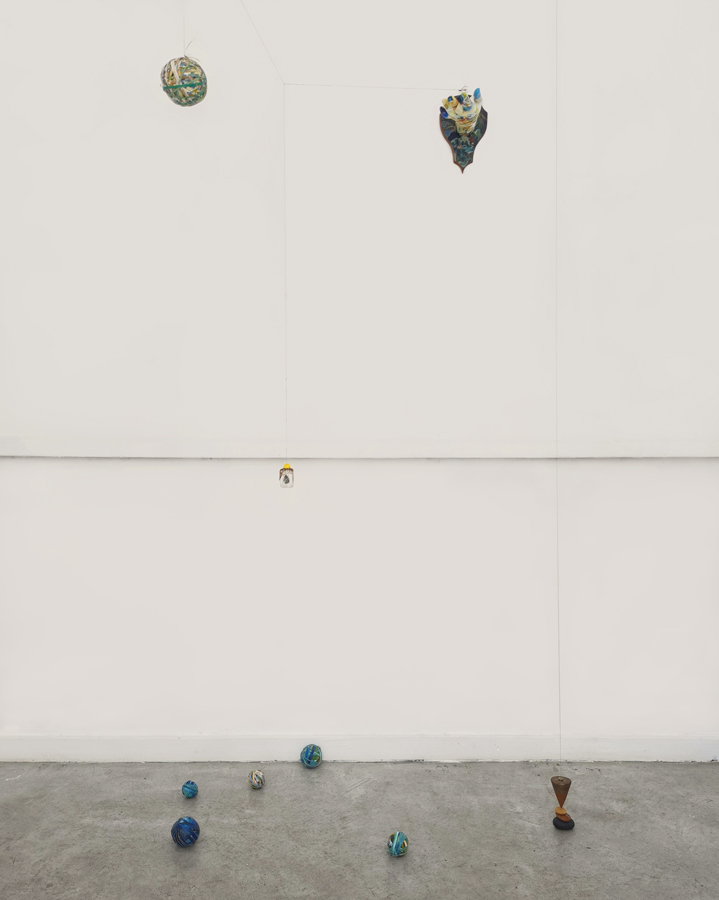
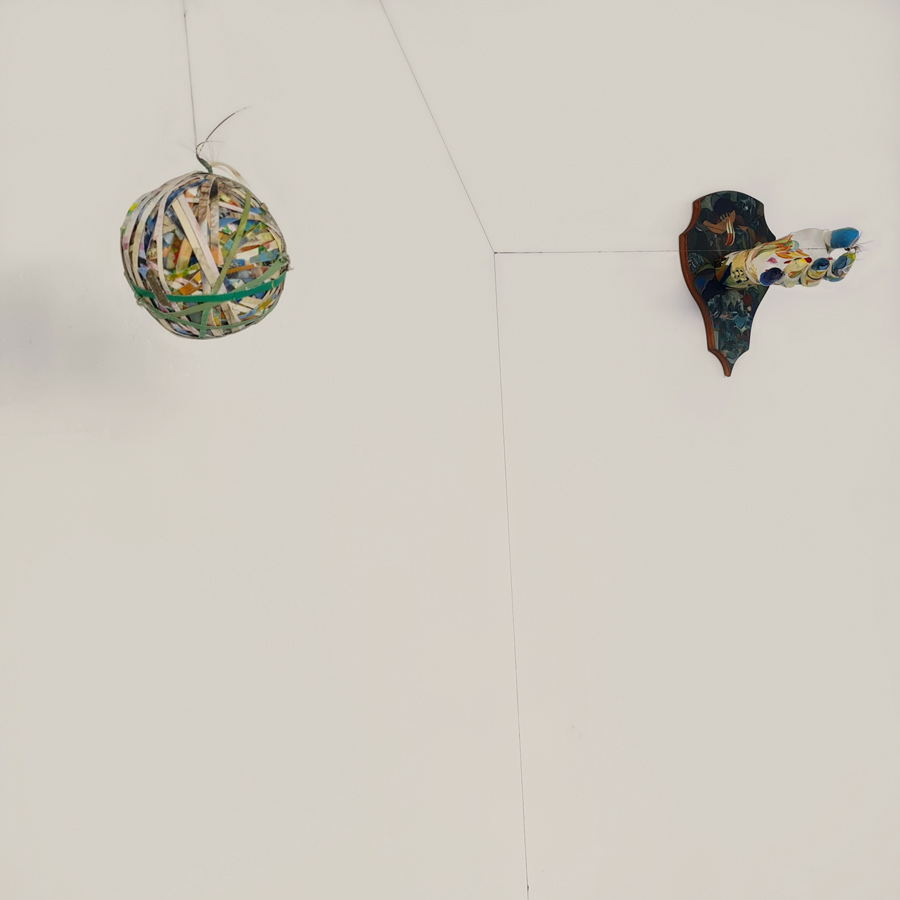
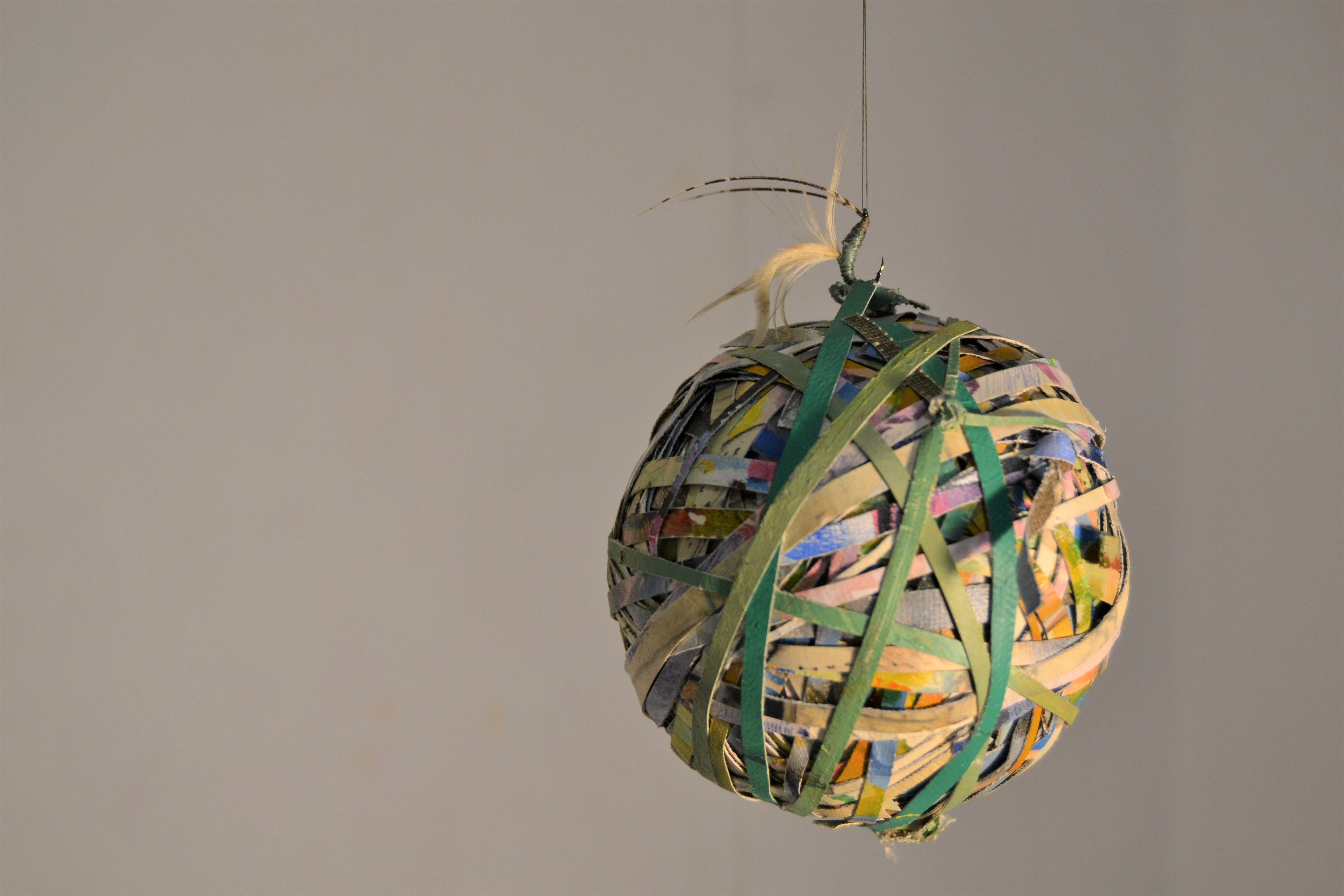
The installation ”Pressure Points” is built from abandoned, failed works, objects found in the closet, and forgotten memories reactivated by childhood activities. These are my recycled memories, bound by a thin thread that holds all the power to keep reality in balance.
“Failed idea(L)s”, is a cube that invites the viewer to interact with an image that leads beyond the reflection of the mirror mounted on the front of the sculpture. The elements inside the box consist of a fake paper test, etched mezzotint plate, and torn drawings that were originally mounted on the scribbled mirrors, all crumpled. I use the sculpture as a default profile image box to bind the experience of perceiving objects, scenes, and events with the immediate vicinity, referencing a process that grafts altered personal memories with unexpected happenings.
My work emphasizes the importance of the landmarks in memory that shape an individual’s identity, far more important than listing and memorizing facts about past events that have nothing to do with us, but are imposed on us to create belonging to a common collective identity. While avoiding historical landmarks in favor of the importance of the living moment, I create works that reveal an enigmatic portrait of the individual in search of his fundamental identity.
Composition Table A1
The inspiration for “Failed Idea(L)s” comes from the time when I used to crumple up my exam papers with bad grades (especially math) and throw them in the gas bin in front of my block’s staircase. Sometimes I would stop to check my collection through the holes in the box, imagining my parents walking past it several times a day without having the faintest idea what the meter box was hiding. The mirror mounted inside the cube and the one on the front were part of my bachelor’s thesis. Originally, they contained painstakingly drawn drawings. After a while, they seemed too safe and I thought I should intervene. So I exfoliated the drawings mounted behind the mirror, where I removed the reflective metal, crumpled them up, and exposed them inside the cube.
Composition Table z4
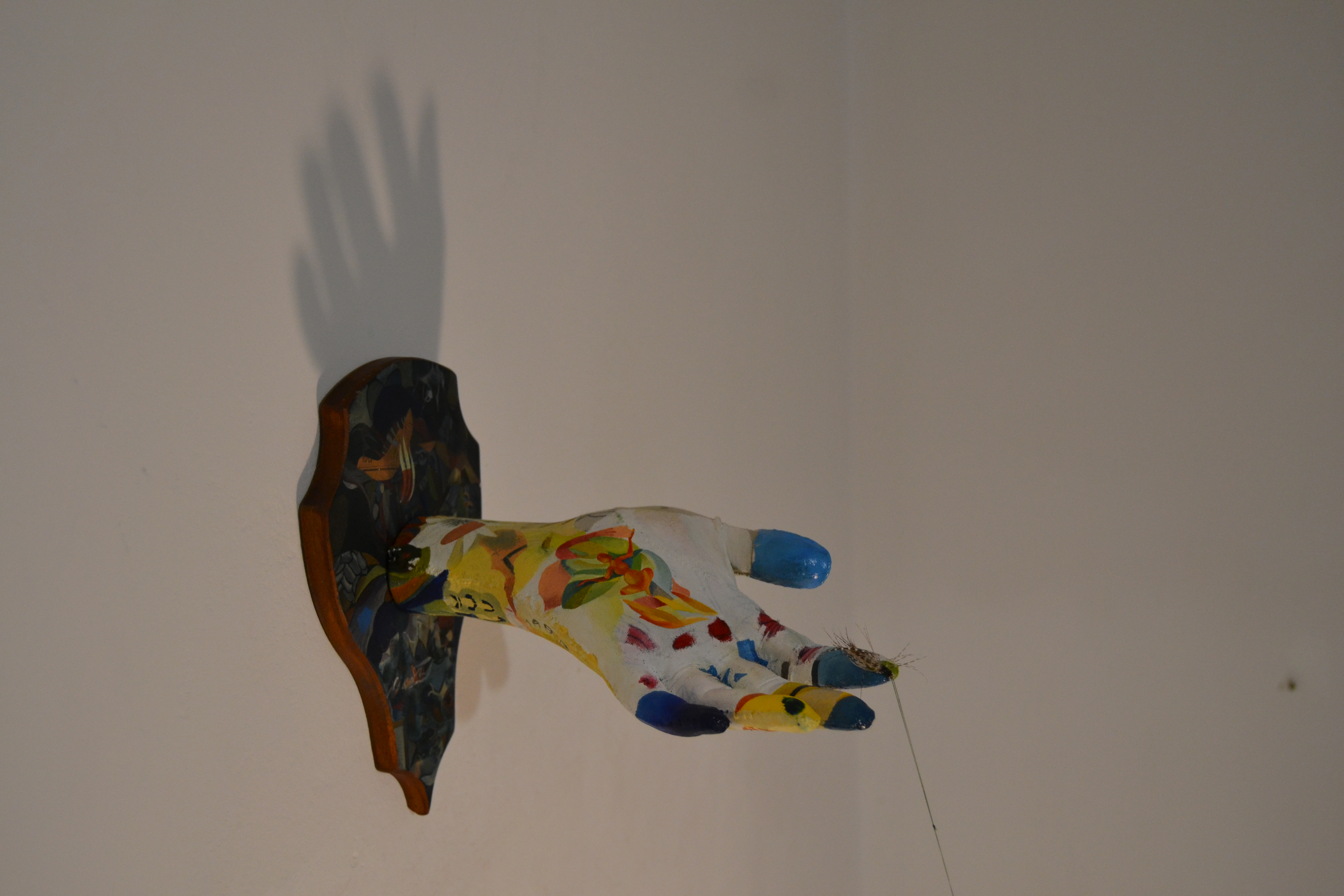
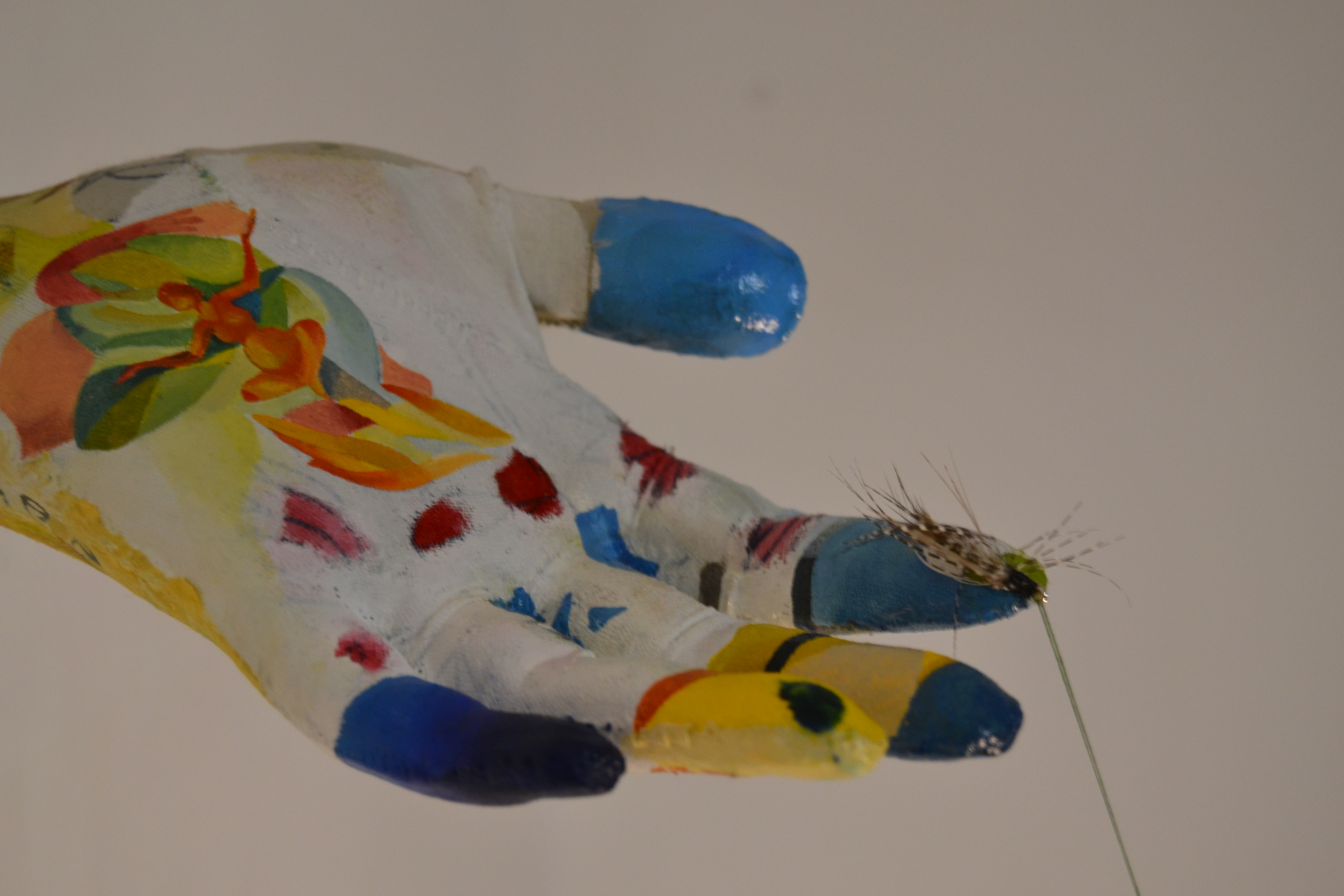
The installation “Pressure Points” contains a little history of my old, extinguished passions, taxidermy and fly fishing, sometime around `97, as well as a still-living passion for painting. I say “still alive” because at some point I started destroying certain paintings and turning them into yarns to use in the installation. The big yarn has the same weight as the plumb bob counterbalancing it. The plumb bob, on the other hand, denotes the technical side, the mathematics that I didn’t get rid of even in 12th grade for calculating the beams in the cutting force. All these inclinations translate into little time capsules that build the structure of an extremely fragile balance.
Contemporary Drawing Publication
23 January 2023

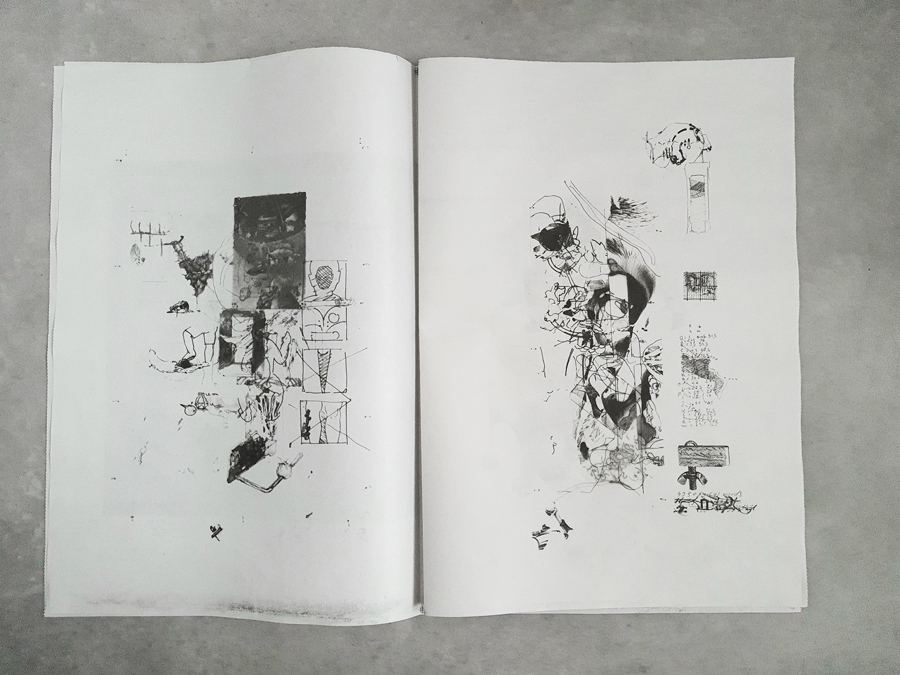
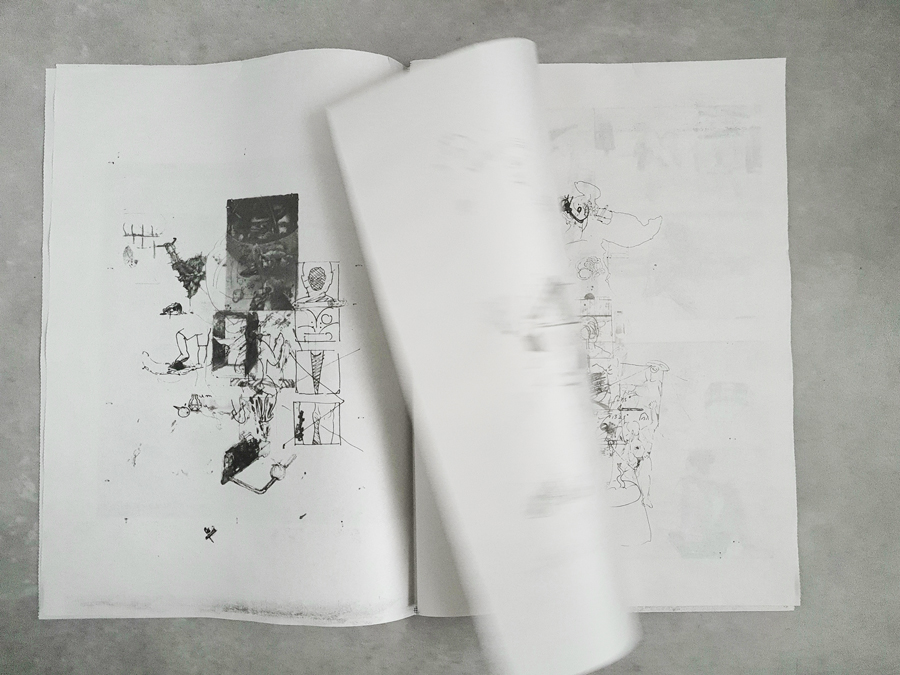

On the way to Rainbow Plaza, Coordinates for a flag-free state, Diagram of self-induced pressure, and Oyster tracks on mother’s belly
Contemporary drawing publication, a collaborative project by the artists Cătălina Nistor and Dan Beudean, is a publication exclusively of images, without title, the participating artists being anonymous until the names of the participants will appear in the last publication, at the end of the year, in an appendix with the mentions in chronological order. The purpose of this anonymity is to invite the viewer to focus their attention first on the image and then search for a name. The content is made up of anonymous contributions by the invited artists.
My contribution consisted of four drawings dealing with the global perception of individuals, and depicting the direct perception of real human beings through numbers, graphs, and impersonal statistics. The works are constructed from certain fragments and elements subtracted from my creative diary, surroundings, and mental imagery.
The Journal was distributed in Matca Artspace and Quadro Gallery – Cluj-Napoca, Art Encounters, Timișoara, Dispozitiv Books -Bucharest, Baia Mare Art Centre: Baia Mare Art Museum.
Performer in “The performative documentarist as the performative documentary” by Emily Ghazal
15 January 2022, Enschede, Netherlands

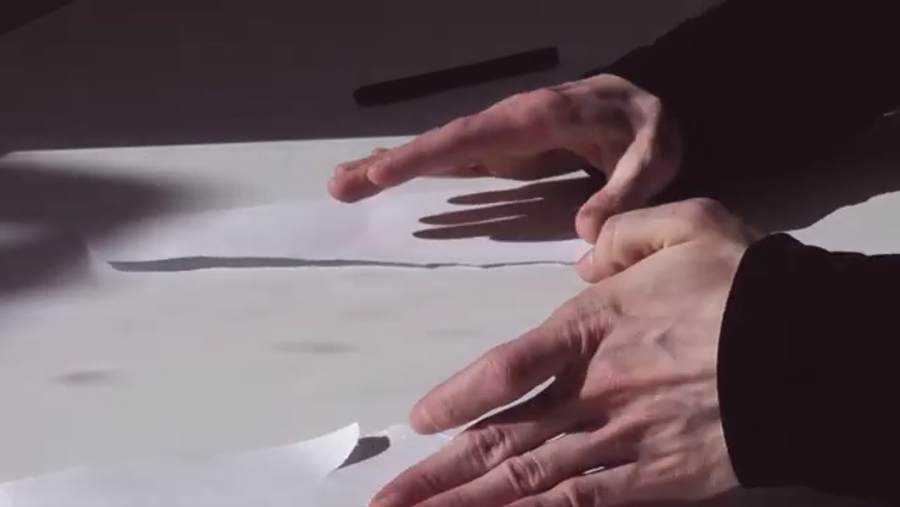
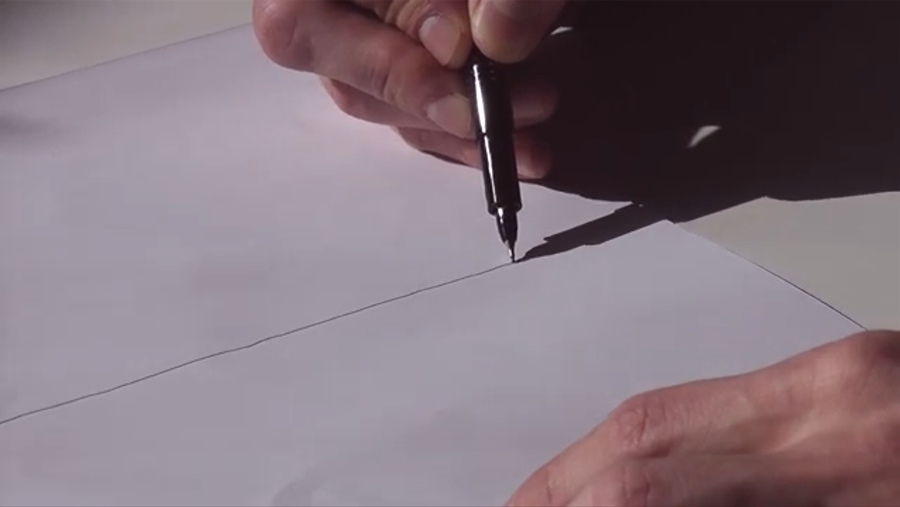
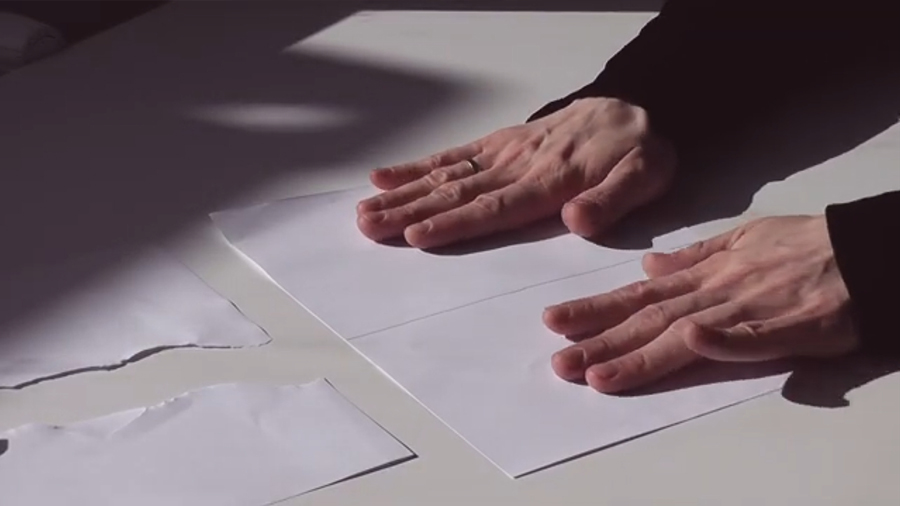
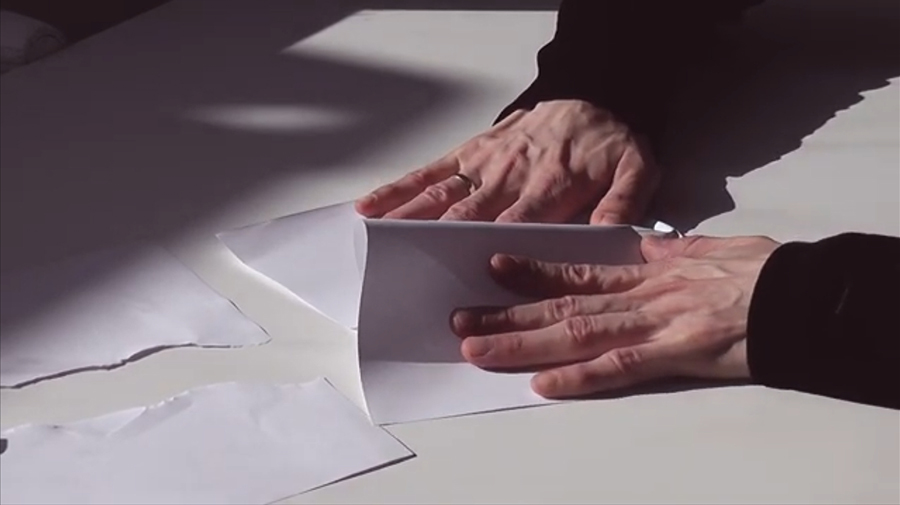
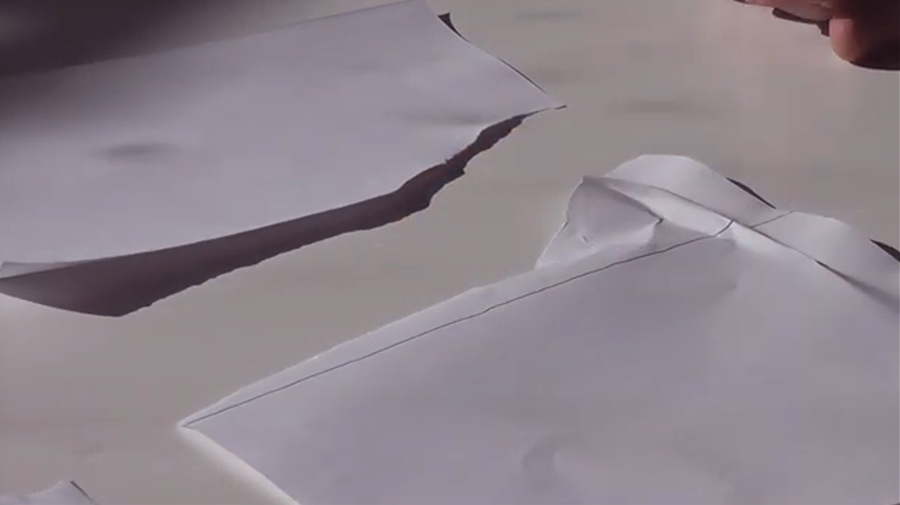
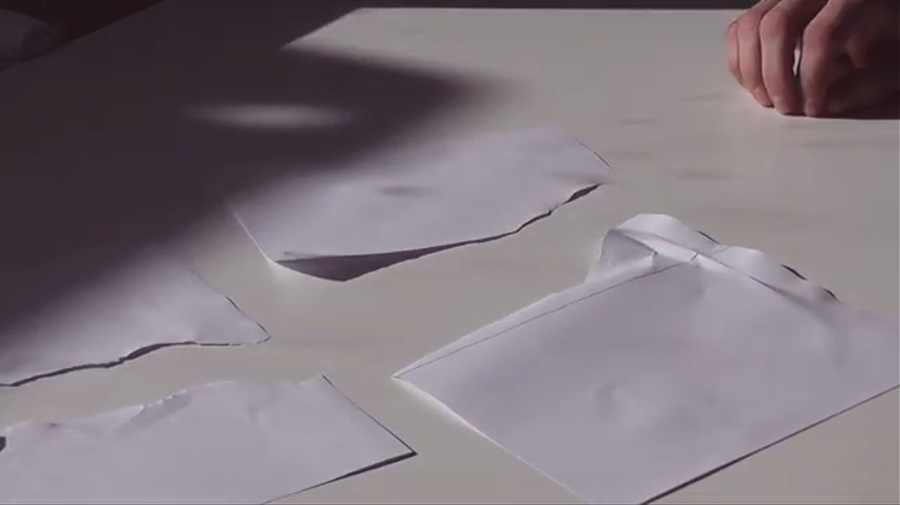
My contribution to the project consisted in testing the materiality of two sheets of paper in two slightly different situations, in which I highlighted the occurrence of chance versus the attempted human control. The imperative schism engulfs the cultural and political aspects with such a magnitude that our daily concern becomes a continuous swing between two opposing forces.
Friche – Centrul de Interes | group show
Why is there something and not nothing?
5 October – 16 October 2021, Cluj-Napoca | Curator: Ovidiu Leuce
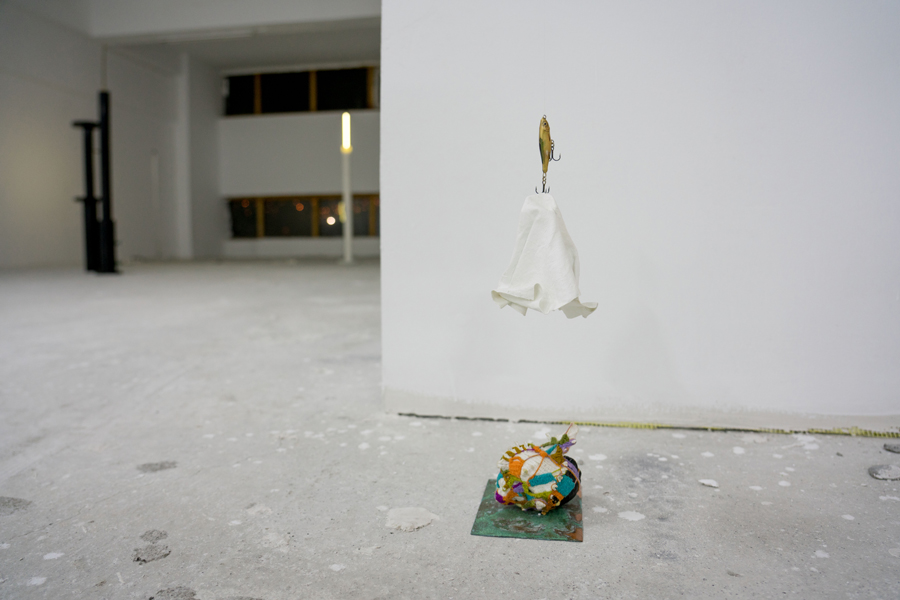
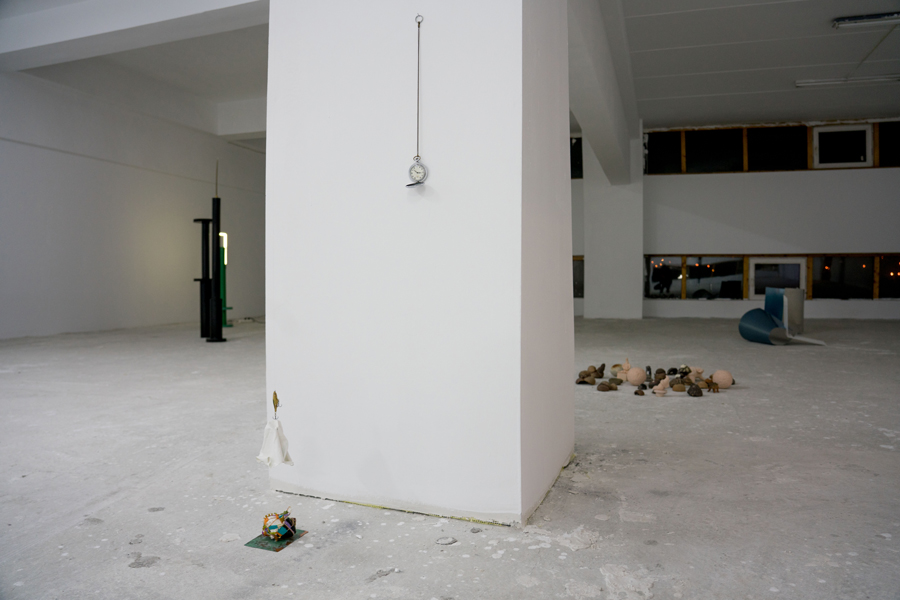
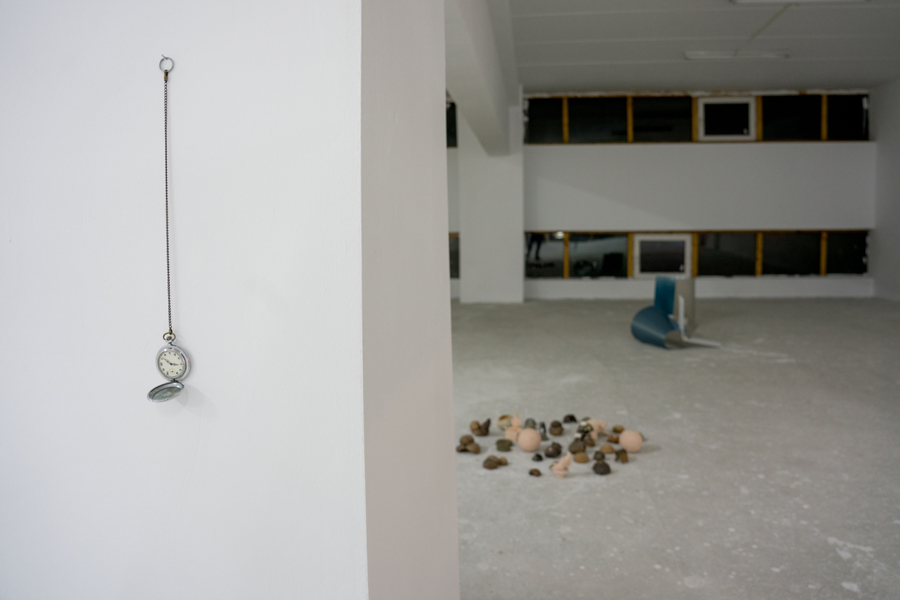
Unveiling the veil
2019, copper, iron, pocket watch, fishing line, seashells, wool, acrylic thread, acrylic paint, cloth, wobbler, variable dimensions
The work contains created elements and personal or selectively acquired objects upon which I had significant, slight, or no intervention. These elements construct a sculptural assemblage in which the pieces rely on each other to create an interconnected dependency. Unveiling the veil uncovers the codependent linkage between familial ties and genetic memory. The structure is extremely sensitive accentuating the tension that lies behind balanced relatedness. The clock, having approximately the same weight as the metallic rhombus, balances the traction of the fishing line, securing the stability of the caught cloth in the wobbler. “Pulling the rag” out of the water, it remains strained a few centimeters above the coupling seashells tangled in colorful threads, leaving traces of salted water upon a coppery plate. The pocket clock belonged to my grandfather, which he clung to have fixed for the second time because it stopped functioning. Unfortunately, the watchmaker could not make it work anymore, so now it serves as an object I had found in my vicinity to stop the rhomboid structure from pulling the fishing lure with its caught-up cloth.
These elements construct a sculptural assemblage in which the pieces rely on each other to create an interconnected dependency. Unveiling the veil uncovers the codependent linkage between familial ties and genetic memory. The structure is extremely sensitive accentuating the tension that lies behind balanced relatedness. The clock, having approximately the same weight as the metallic rhombus, balances the traction of the fishing line, securing the stability of the caught cloth in the wobbler. “Pulling the rag” out of the water, it remains strained a few centimeters above the coupling seashells tangled in colorful threads, leaving traces of salted water upon a coppery plate. The pocket clock belonged to my grandfather, which he clung to have fixed for the second time because it stopped functioning. Unfortunately, the watchmaker could not make it work anymore, so now it serves as an object that I found in my vicinity to stop the rhomboid structure from pulling the fishing lure with its caught-up cloth.
The work features in the film “Act nr.5/ Searching for instructions in the manual called – InterActing with a sculptural assemblage.
How to…” will be used in a future project as a guiding video to build the film “Act nr.4”.
Nano Gallery | solo show
DemoGraphics | Rhythm and flow
7 May – 4 June 2019, Cluj-Napoca | Curator: Gabriel Marian

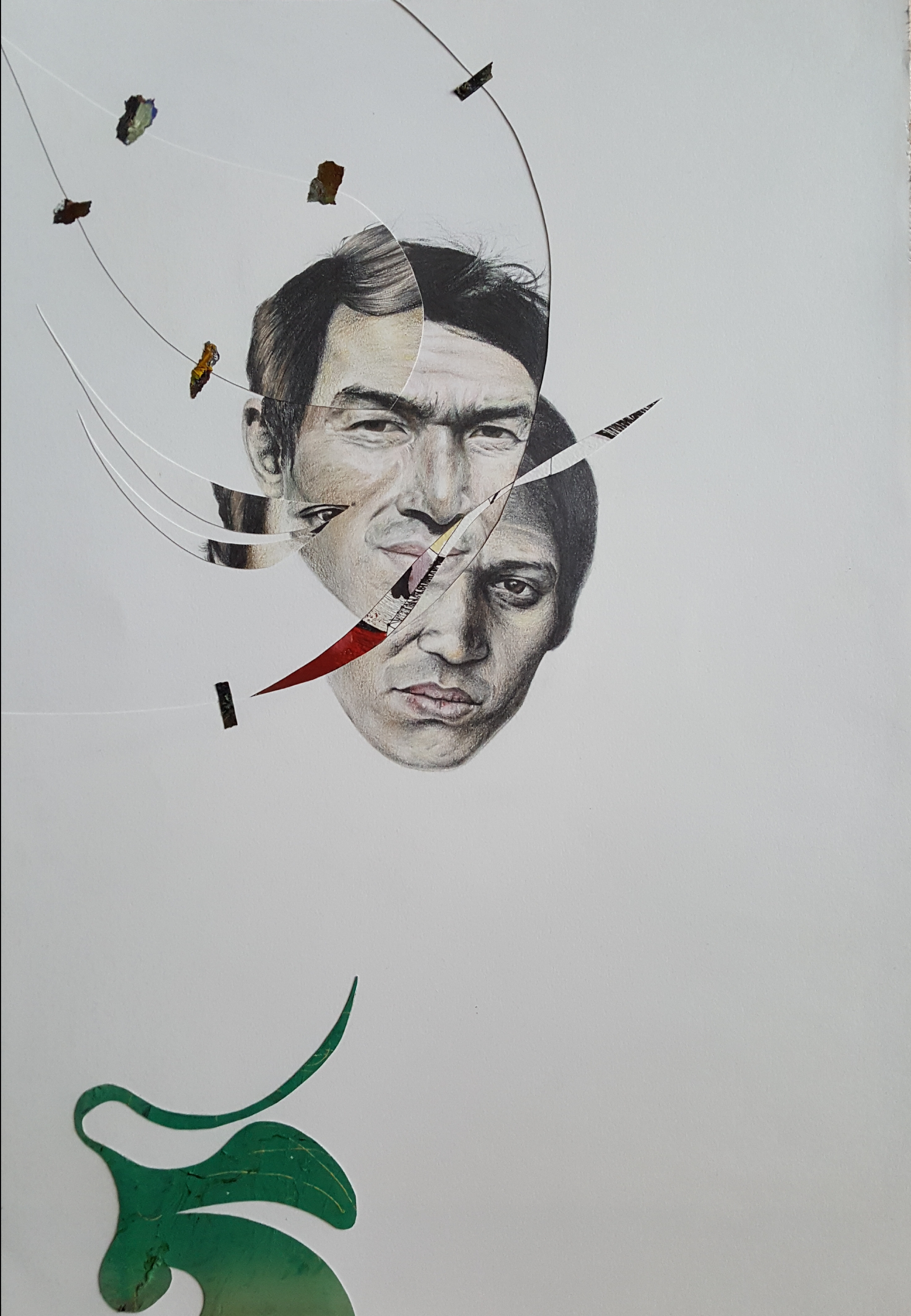
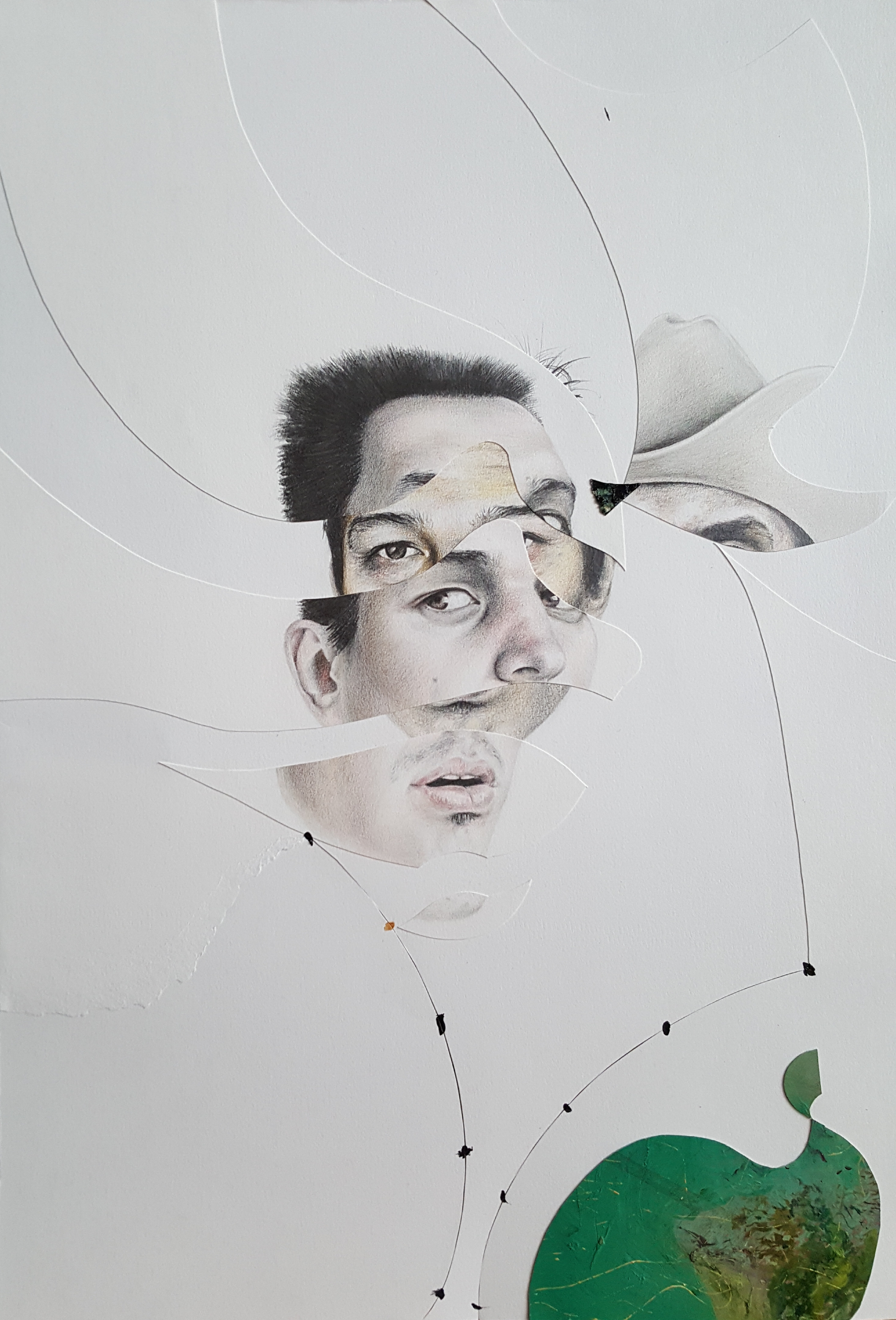
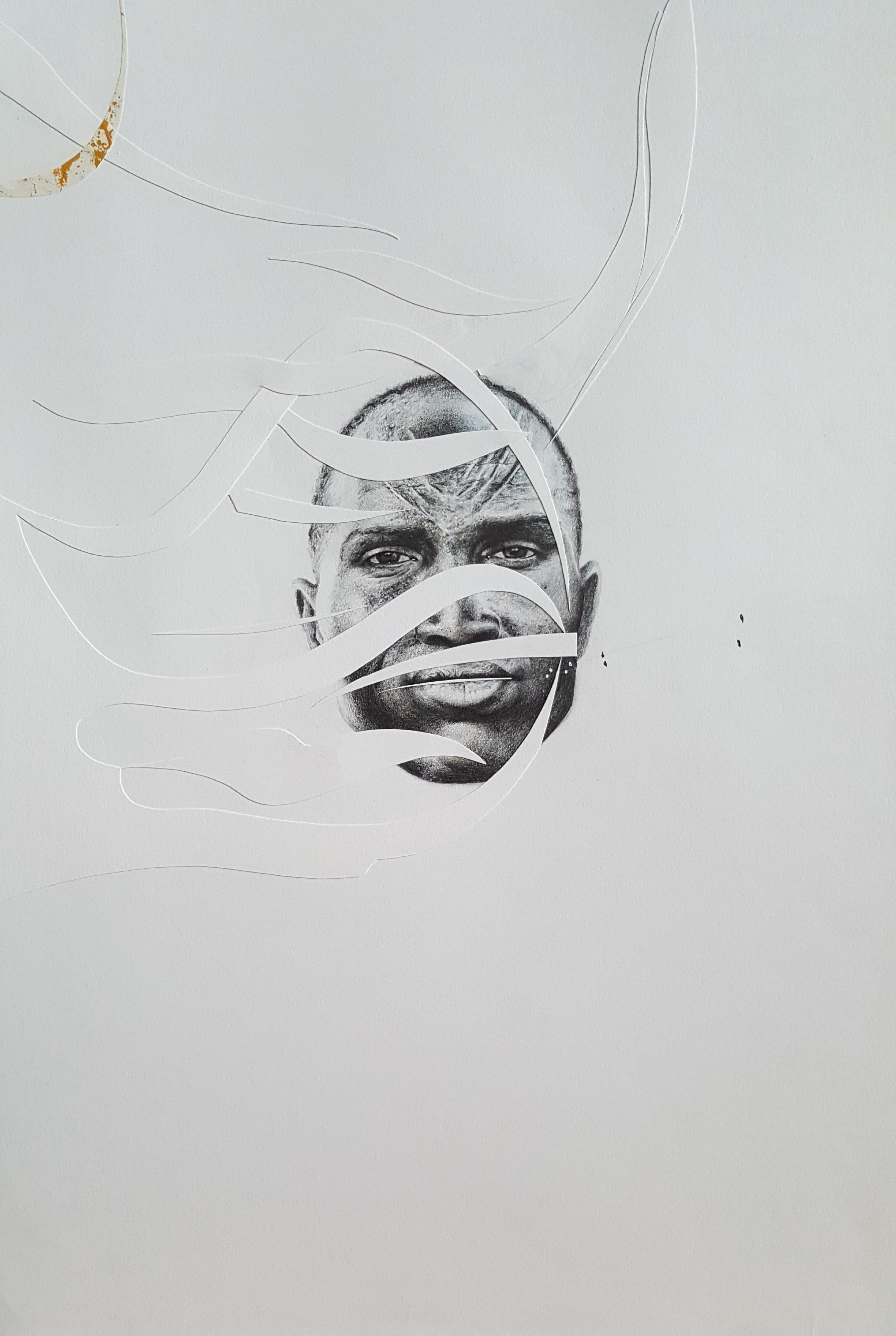
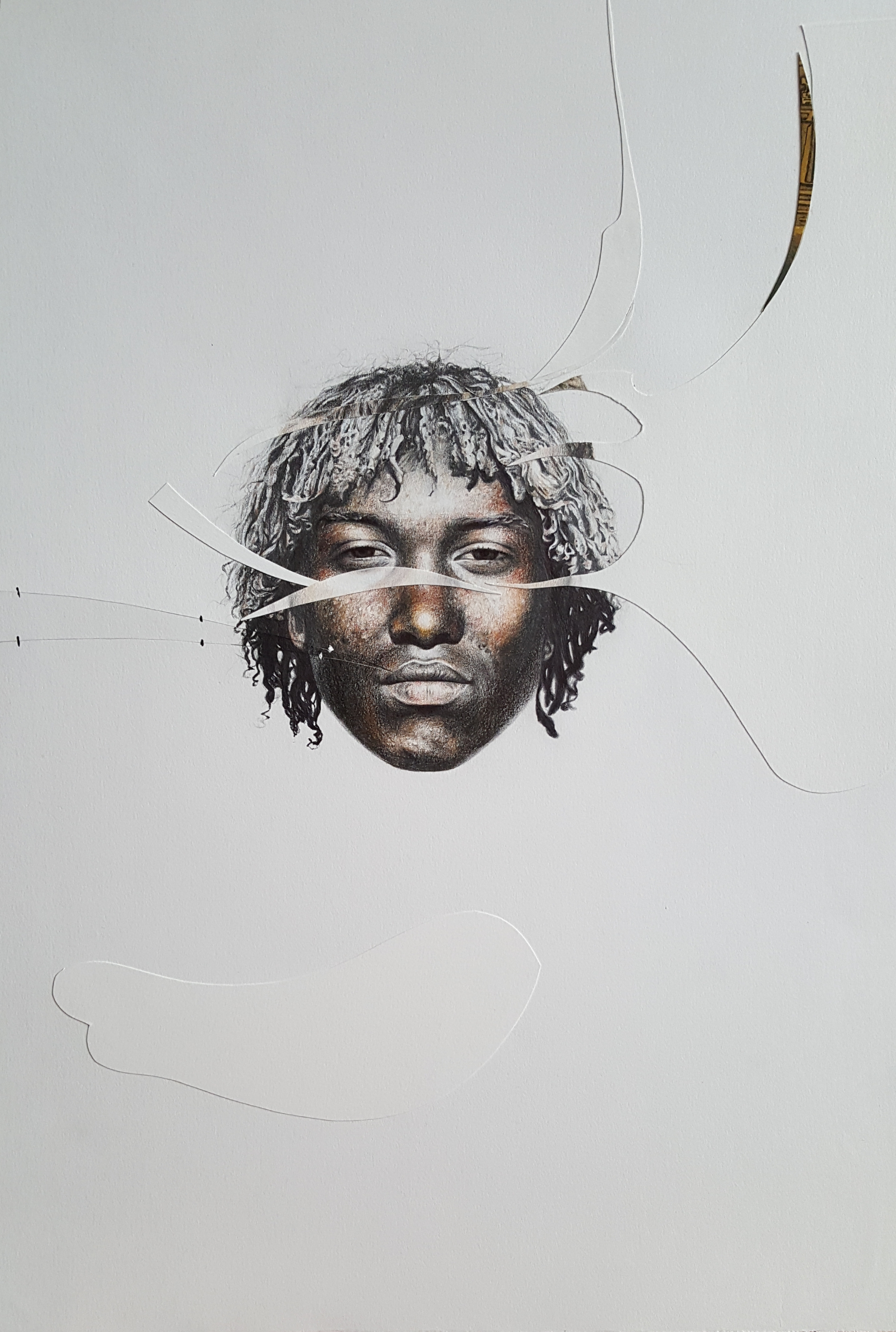
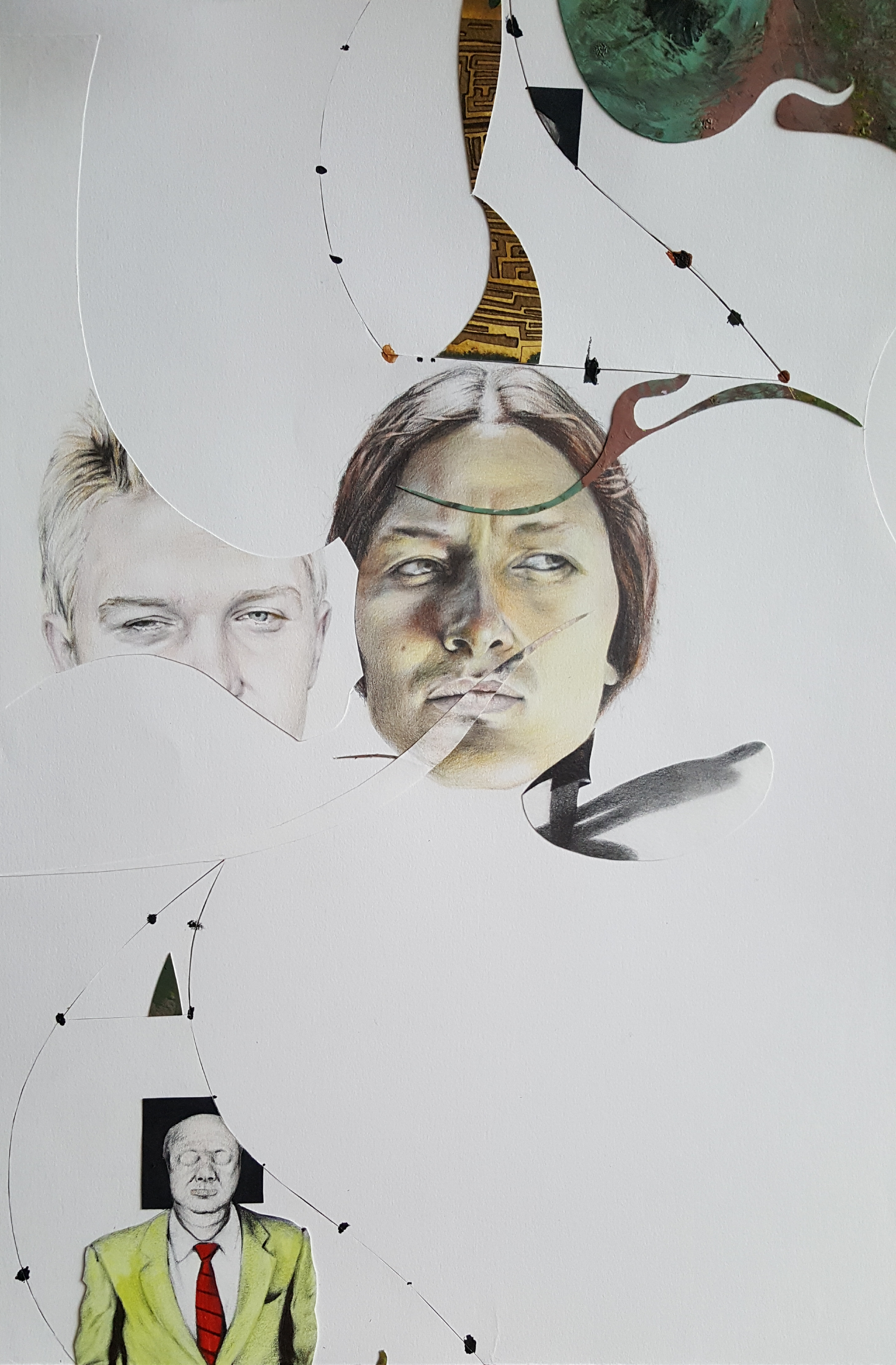
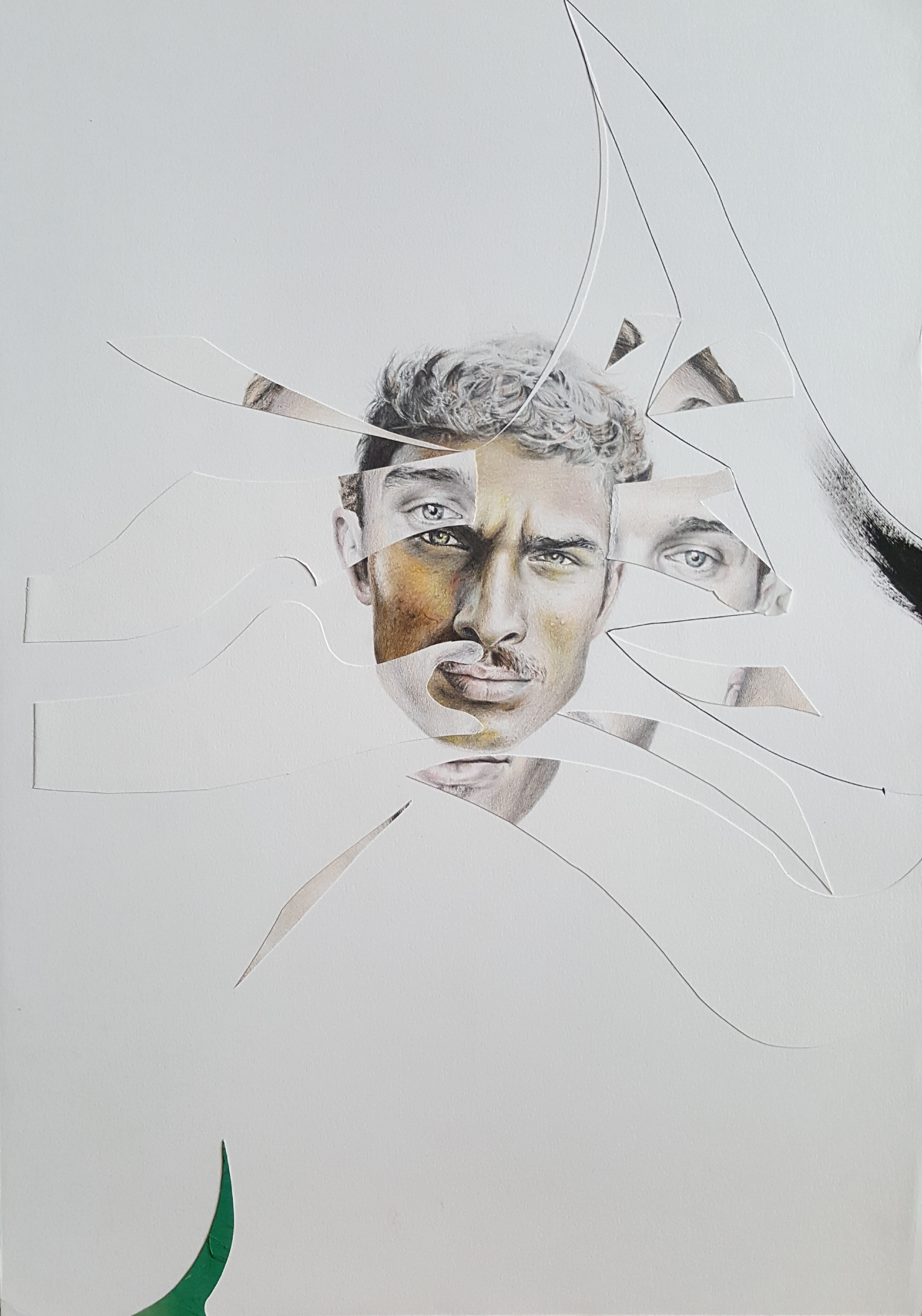
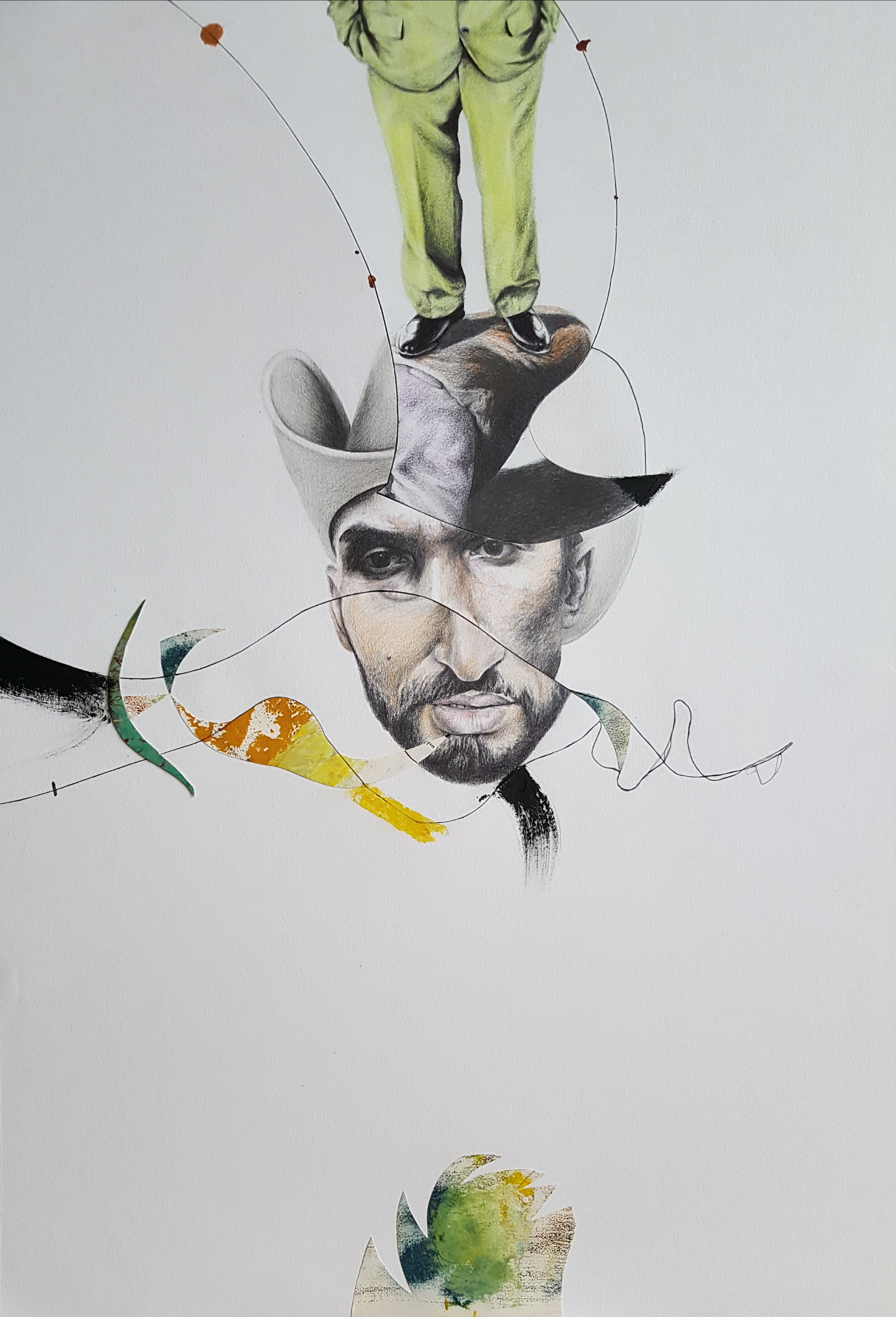
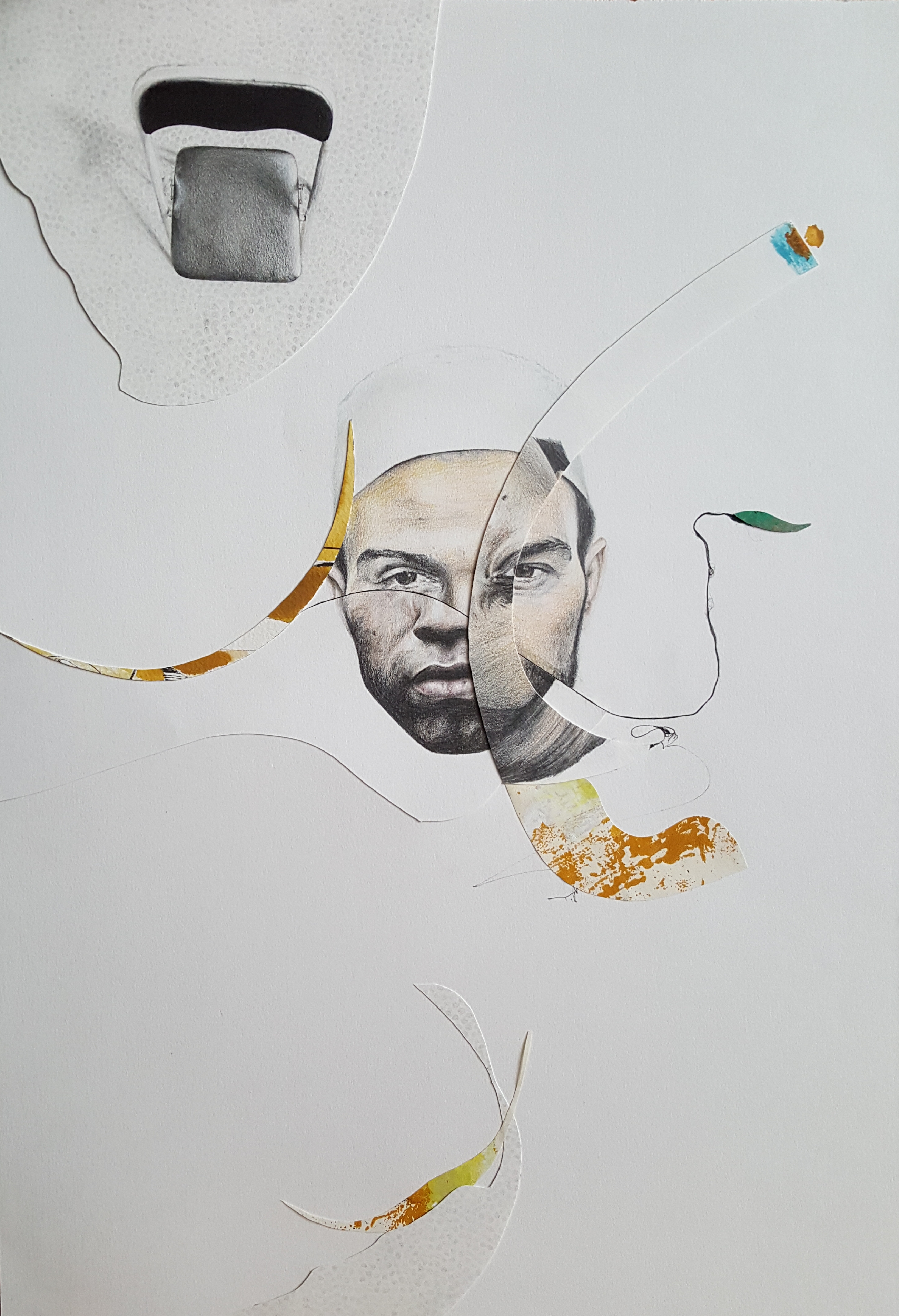
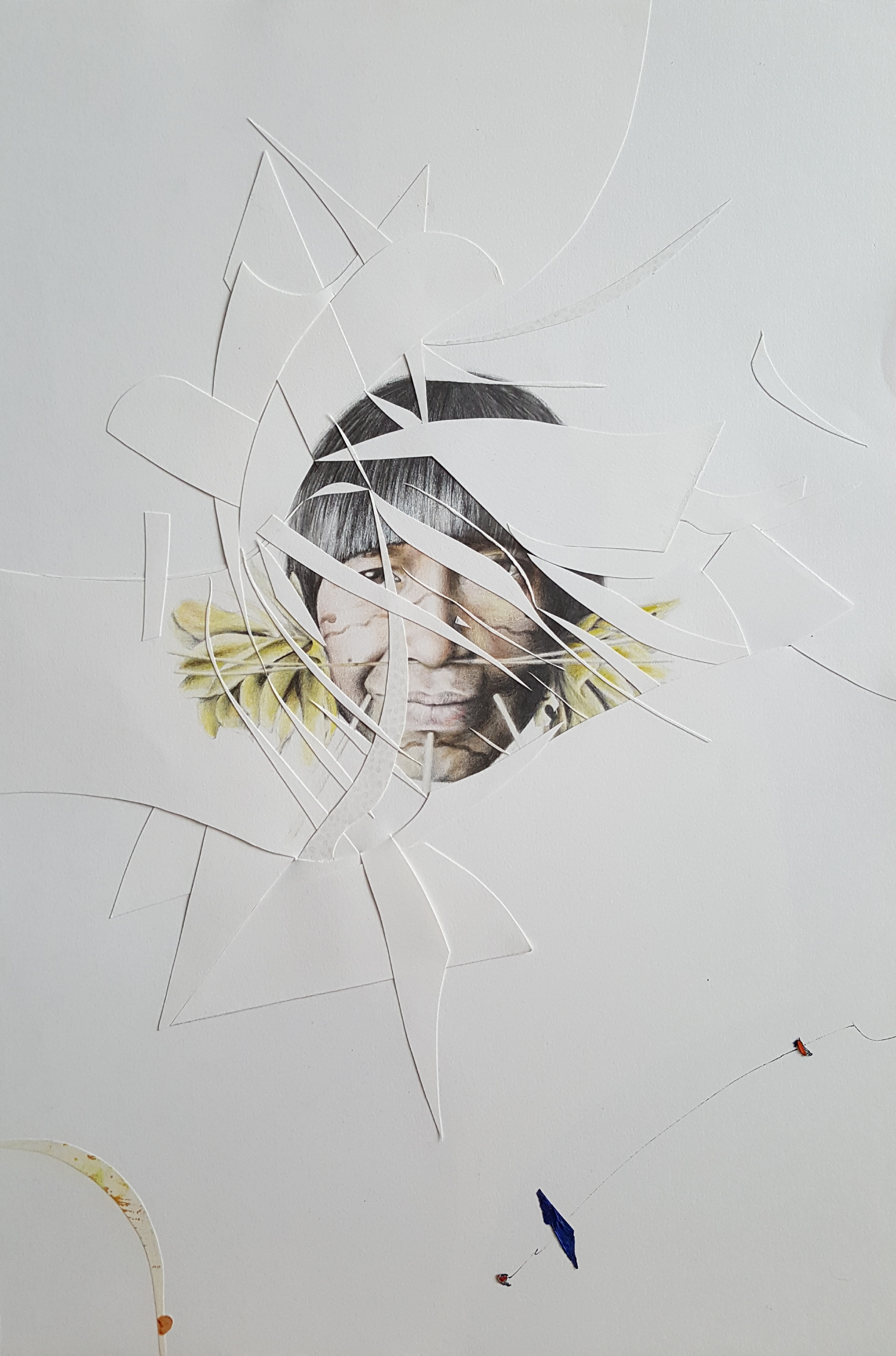
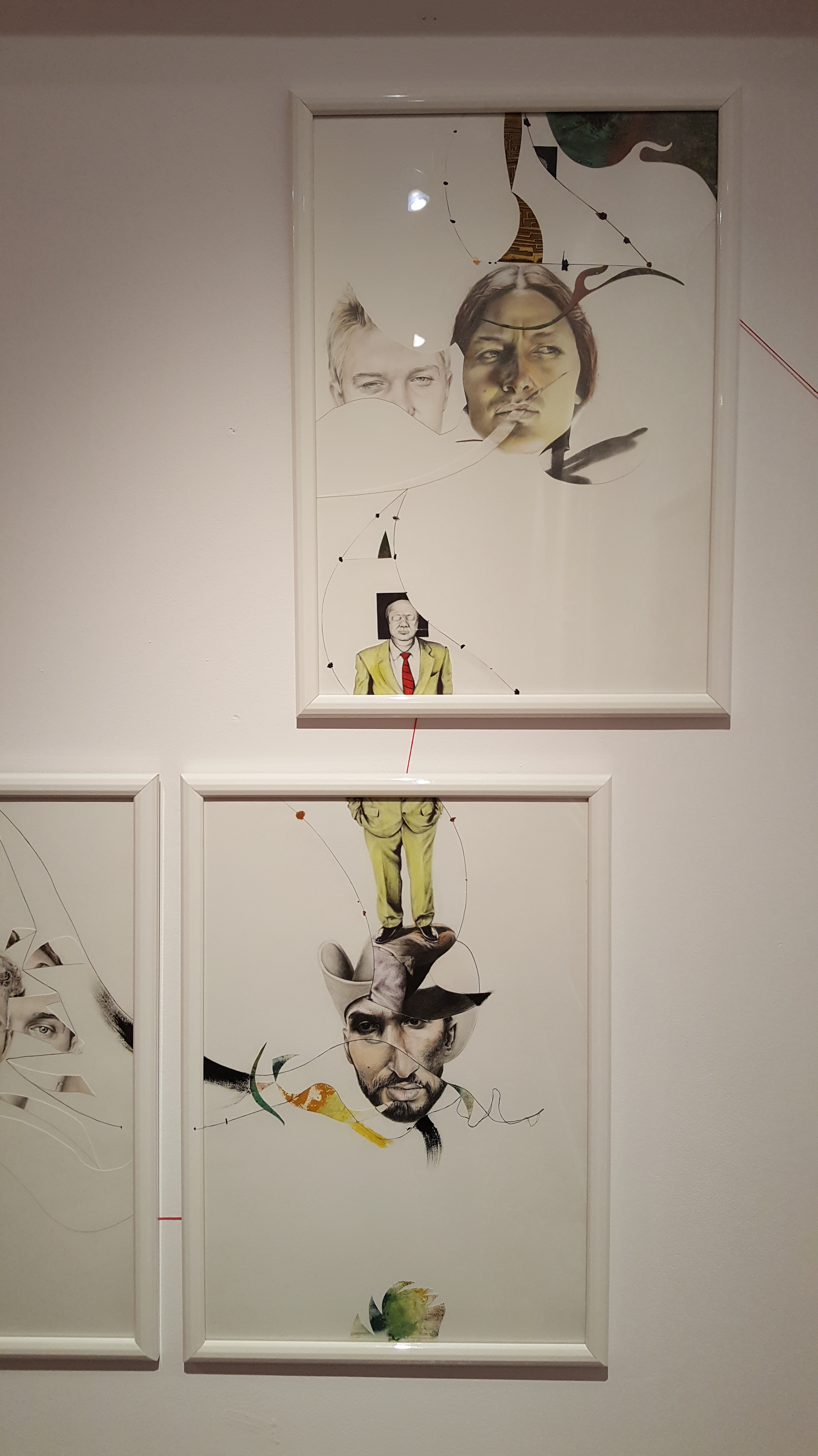
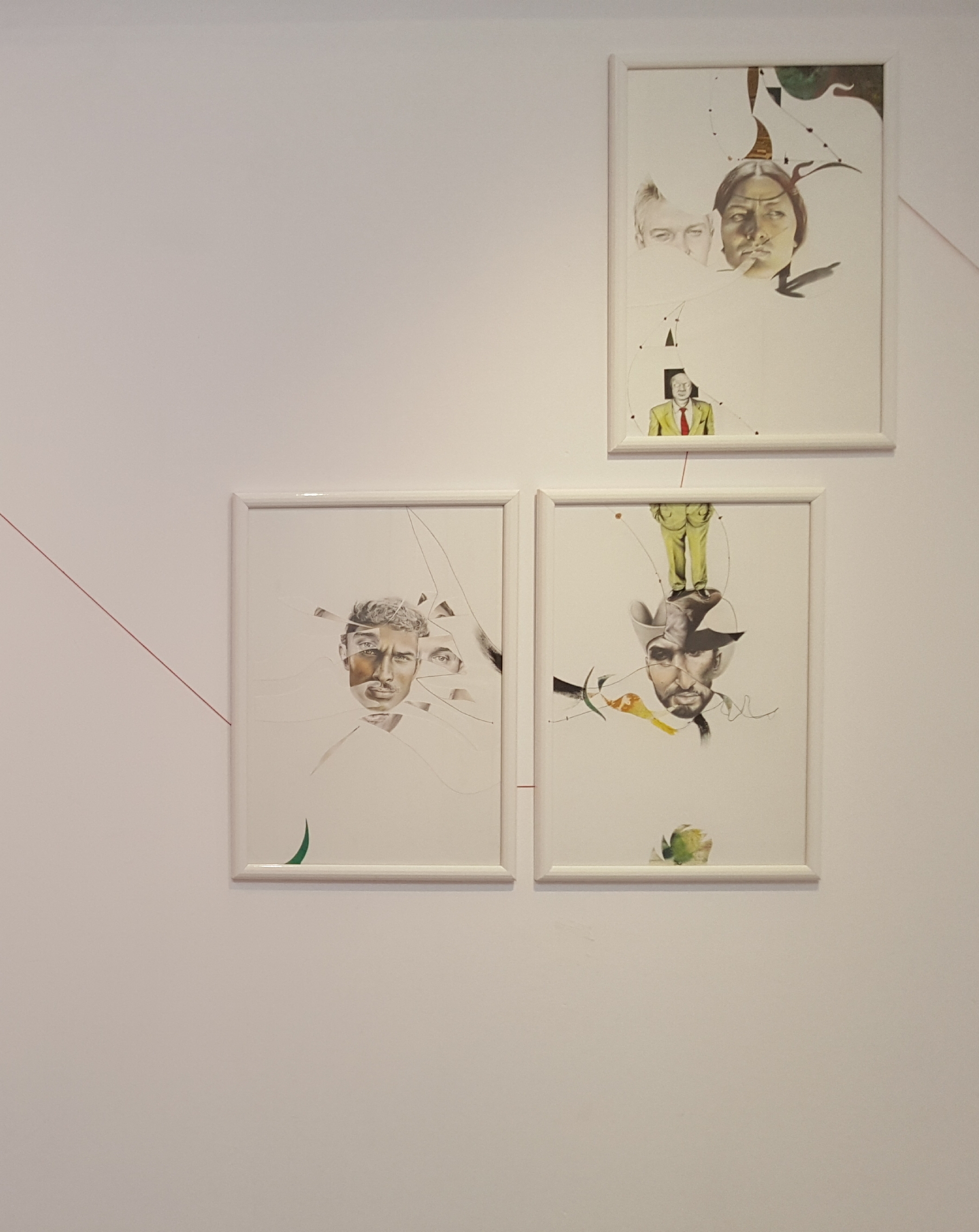
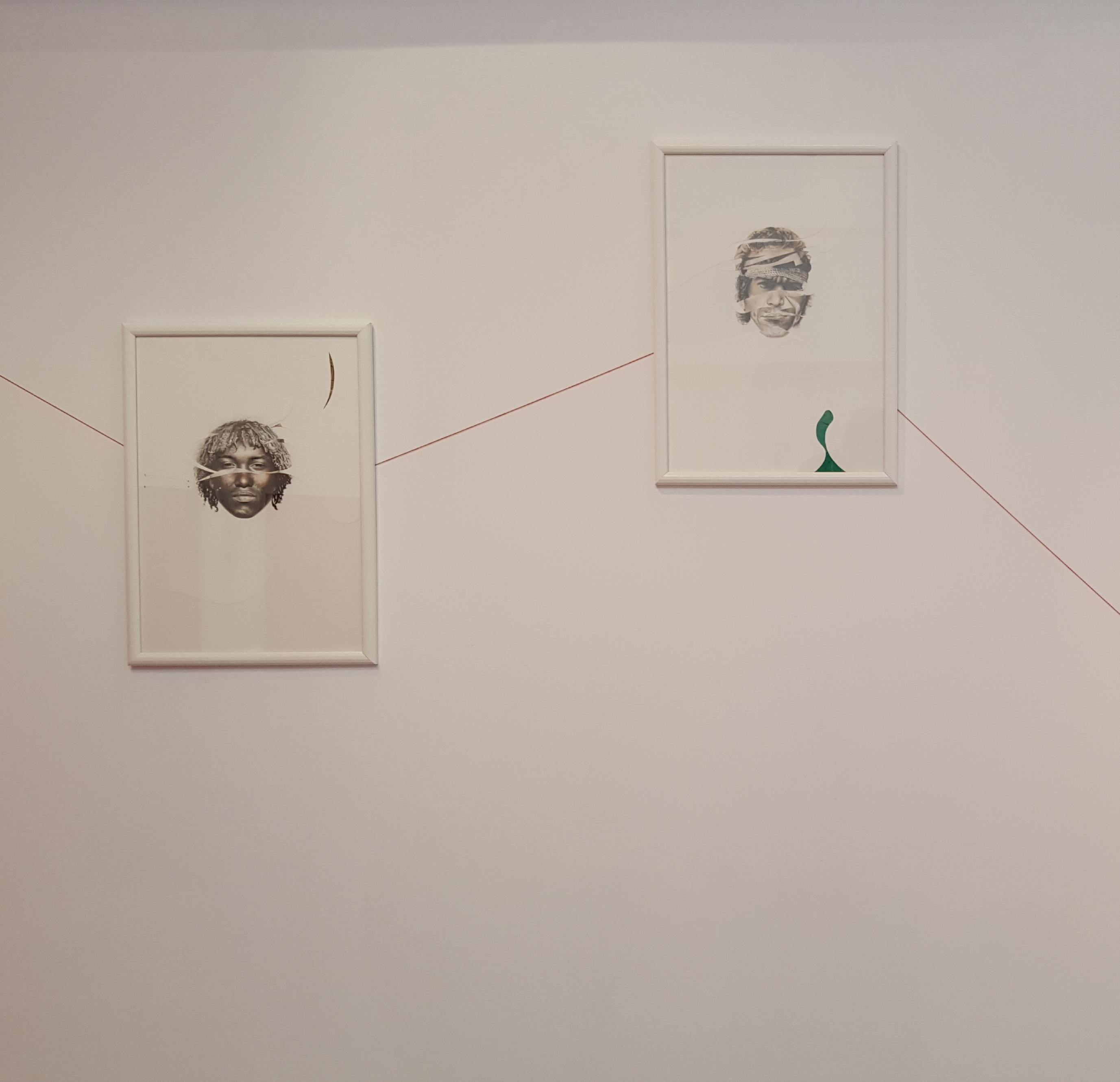


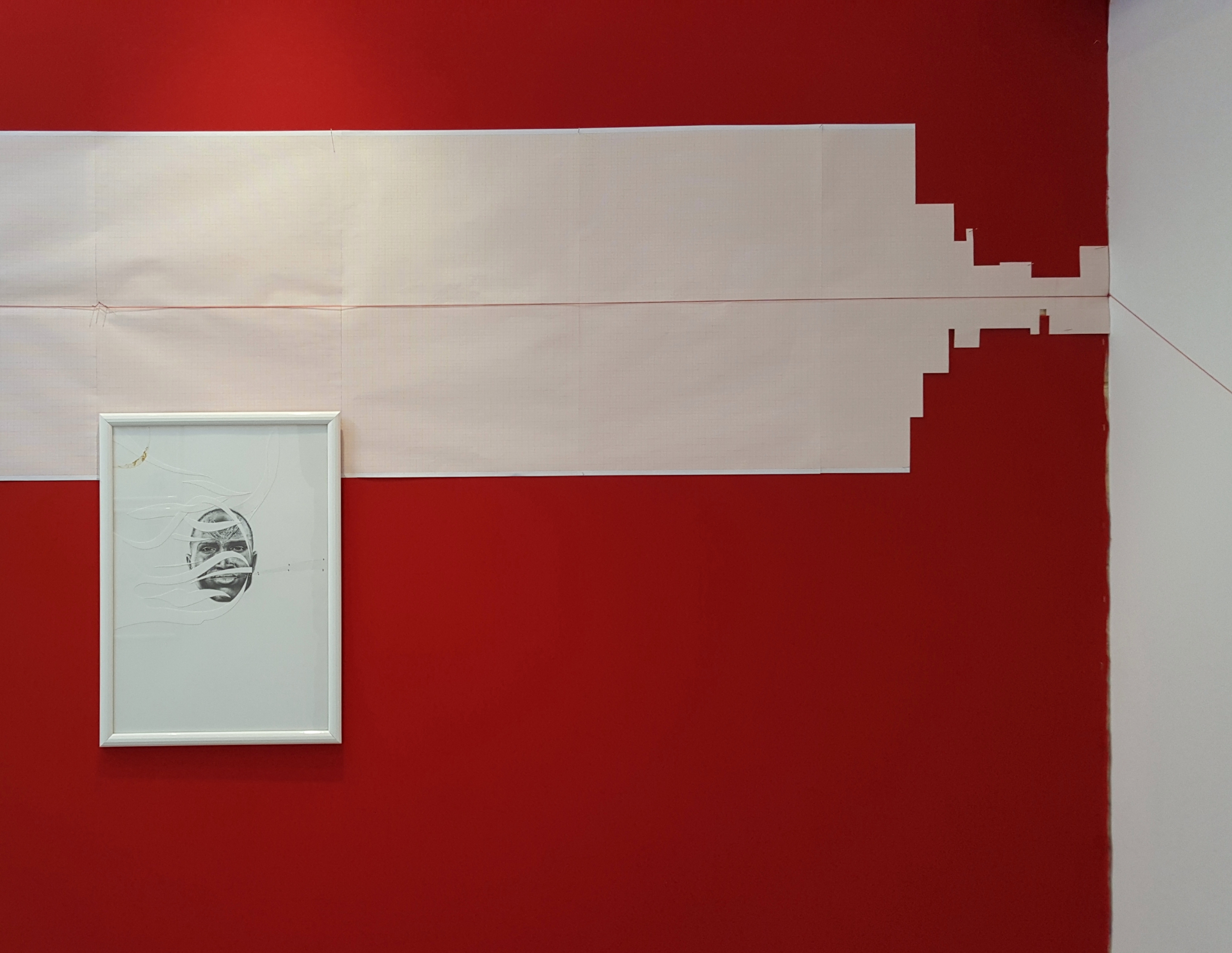
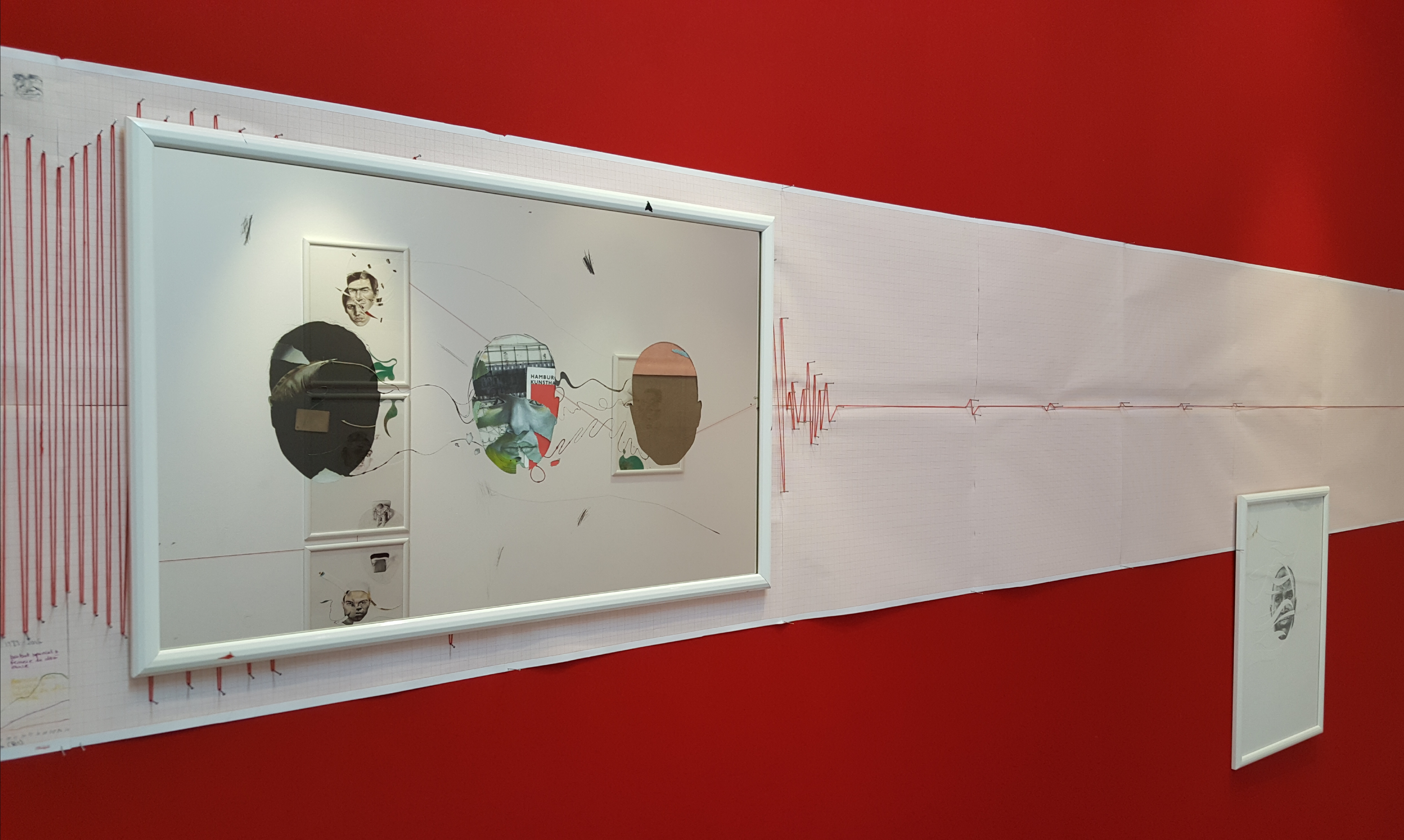
The flow and the fusion of populations: living phenomena that overwhelm and involve us all, whether we accept it or not. A permanent balance between the illusion of racial/ethnic/genetic purity and the reality of the constant and unpredictable weaving of the most diverse DNA strands. The oscillation between a local/temporary lack of diversity that often slides into endogamy and the richness of adaptive mutations brought up by chaotic and unplanned combinations.
Art has the chance and the power to follow and record the rhythm and the hidden music of these processes. Marius Bejera’s graphic project transcribes thoroughly the moment when clear limits get blurry, when phenotypes are merged together, and differences are erased. Just as the face of any child is a strange and unpredictable remix of features borrowed from both parents, similarly the face of any mixed-blood rewrites the history of entire continents. The thread of controllable events that re/define human nature could be transposed on a score of symphonic proportions (in the sense of harmonic sound structure). The artist displays here a particularly complex vision upheld by compelling technical virtuosity.
Gabriel Marian
The works that I am bringing into focus explore the state of transition, highlighting a turning point in development. In assembling the concept, I came back to some of my abandoned graphic projects. The working method consists of carefully cutting or tearing finite drawings into multiple parts and restructuring them. The subject matter deals with the diversity and richness of the possibilities that arise from change and realignment. By choosing to adapt outdated structures, I found that something is neither created nor destroyed. The victory of the process is a totality that moves for the sake of movement, not for the pleasure of being solid and tangible.
What is the meaning of the work if the work is not aiming toward concrete and finite form? I could define its purpose by saying that the body of work is a shape-shifting moment expressed by a series of events and impressions.
“Unnumbered Three” and “Metropolis” hold the ability to involve the participants to find their reflection, a mystery beneath, or resonance in front of it, for they both describe a historical background of people and cultures where everyone holds his mirror.
Metropolis
2019, fragmented drawings, fragmented painting, polymer thread, variable dimensions
The metropolis is a concentrated point standing for new forms of human cohabitation. These urban centers bring creative impulses through multiple unplanned interactions. ‘Metropolis’ is a graphic series having close ties to its notion, the urban system, where differences intertwine and cultures blend. This project contains twelve self-portraits with specific and distinctive aspects of people from different parts of the world. I pictured myself with features of certain cultures to raise awareness of human diversity and the complexity of our heritage.
Six years after finishing the project, I came back and restructured it by cutting the finished pieces. It took some years to find the boldness to take this stance in sectioning most of the drawings. I displaced parts from other works to move the discourse towards the movement of the moment. To shed light on the product side of the work, I used different materials such as colored pencils, mechanical pencils, ball pens, thread, acrylic, ink, and sections of a destroyed oil painting. The creative practice is a reflection by which transformation occurs through the separation and assimilation of multiple components. The reason for this approach is to present an affirmative position towards change through a renewed act of union. The fitting of the individual subject into a collective is an ever-incomplete process and a never-ending becoming.
Unnumbered three
2019, carved mirror, a long-eared owl feather, fishing hook, fishing line, copper plate, thread, black and white negative film strip fragment, torn drawings, museum ticket, fiber cloth
Two portraits of the opposite gender stand on the sides, while the middle one combines both features. At the beginning of the process, within the long-term development of the work, I carved the reflective coating from the backside of a mirror and mount three pencil drawings. Somehow, I disliked the piece putting it on the side. After some years, I came back to it, cleaned the dust off, and decided to rip the drawings. Carefully selected materials and objects, I assembled them behind the left traces of paper. All the mentioned elements are taken out of their day-to-day usage and translated into an image. Their reading comes from displacement of their common relativeness, not from their utility or a grant to avoid the obvious. A museum ticket can be a door opener to art or a filmstrip marker in time. Instead of idealizing the portrait of a person with power and worship, I have defied it and questioned its relevance. The act of tearing them apart describes the incursion into the hidden side of things, the curiosity of what lies behind appearances. The mirror draws a poetic portrait and asks viewers to question norms and dive into a world beyond flattery and praise.
 Marius Bejera